
Hub IA-Éducation

Hub IA-Éducation

Il existe un large consensus sur les interventions qui améliorent les résultats scolaires. Le défi a toujours été de les adopter à grande échelle et de faire en sorte que les communautés défavorisées en bénéficient. Le domaine de l'IA en éducation connaît une croissance fulgurante, et l'espoir est qu'elle puisse devenir un outil essentiel pour aider les élèves, les enseignants et les éducateurs en général. Compte tenu de la mission de l'Institut Sangalkam, il est indispensable de suivre de près les avancées dans ce domaine et de déterminer quels aspects de l'IA en éducation sont les plus prometteurs pour améliorer l'apprentissage à grande échelle et à un coût abordable dans les environnements scolaires aux ressources limitées.

Insights from Thought Leaders

Défis et opportunités de l'IA

Défis

Connectivité insuffisante et manque d'appareils

Différents niveaux de compétences numériques selon les enseignants

Manque de temps à consacrer à la formation en dehors du travail

Opportunités

Concevoir des programmes de formation pour des solutions réelles et durables

Accompagnement pratique, identification d'enseignants innovants pour aider les élèves en difficulté. Création de communautés de pratique solidaires.

Intégrer un module de formation numérique et d'IA pour la formation préalable, opérationnelle et continue

Hub IA-Éducation

Notre stratégie d'éducation à l'IA

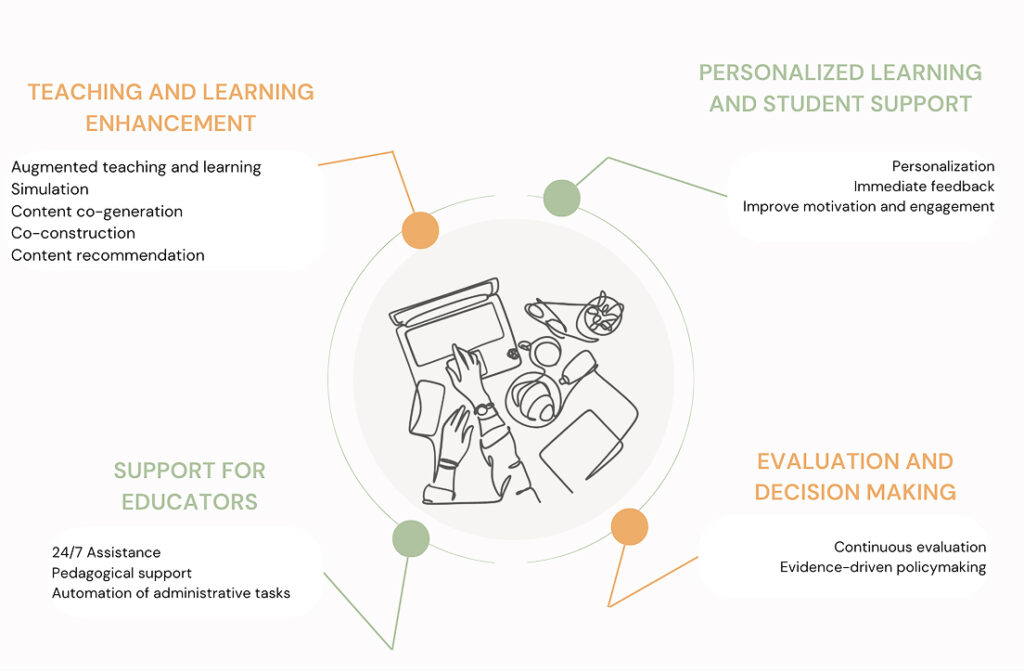
À l'Institut Sangalkam, nous sommes convaincus que l'intelligence artificielle n'est pas un simple outil : c'est une force transformatrice qui peut nous aider à personnaliser l'apprentissage, soutenir les enseignants, renforcer le leadership basé sur les données et accroître l'équité en éducation. Notre stratégie IA - Éducation met la technologie au service de notre mission : donner aux étudiants, aux enseignants et aux communautés les moyens de disposer de systèmes intelligents, éthiques, inclusifs et ancrés dans les réalités locales. En nous appuyant sur des objectifs et une vision, nous aspirons à façonner un avenir éducatif à la fois innovant et centré sur l'humain.

Avantages potentiels de l'IA dans l'éducation
Our AI Education Strategy

A. Énoncé de Vision:

  • « Nous envisageons un Sénégal où chaque élève, enseignant et leader d'opinion navigue avec confiance entre les opportunités et les défis de l'ère de l'IA, favorisant ainsi la créativité, la pensée critique et l'innovation éthique pour le bien national et mondial. »

B. Mission:

  •  Éduquer les élèves de la maternelle à la terminale avec un programme d'études inclusif et tourné vers l'avenir qui intègre l'alphabétisation en IA, le leadership éthique et les valeurs sénégalaises .  Donner aux enseignants les moyens d'une formation dynamique de classe mondiale qui leur permet d'utiliser, d'enseigner et d'interagir de manière critique avec les outils d'IA dans divers environnements d'apprentissage.  Inspirer la recherche, le dialogue et l’élaboration de politiques grâce à un groupe de réflexion dédié qui façonne l’adoption d’une IA éthique, culturellement fondée et durable dans l’éducation et au-delà.
  • Empowering teachers through dynamic, world-class training that equips them to use, teach, and critically engage with AI tools in diverse learning environments.
  • Inspiring research, dialogue, and policy development through a dedicated think tank that shapes ethical, culturally grounded, and sustainable AI adoption in education and beyond.

A. Énoncé de Vision:

  • Implement AI-powered adaptive learning platforms tailored to individualneeds, learning styles, and pace
  • Use predictive analytics to offer early interventions or struggling students
  • Foster student agency by enabling personalized project-based learning experiences

B. Intelligent Operations

  • Automate routine administrative processes (attendance tracking, scheduling) to allow educators to focus more on teaching
  • Introduce AI-driven systems for resource allocation, facility management
  • Apply AI chatbots for real-time, student, and teacher support

C. Teacher Capacity Building

  • Equip educators with Ai toolkits and training on using AI ethically and effectively in the classroom
  • Develop simulation-based teacher training modules that allow practice in virtual environments

D. Intelligent Operations

  • Establish or partner with Ai-Education labs to conduct research on Ai impact on learning outcomes
  • Leverage AI tools to simulate educational policies
  • Partner with research institutions and policymakers to co-create AI guidelines for responsible use in schools

E. Ethical AI & Governance

Promote digital citizenship and critical thinking about AI among students
and staffs

A. Adaptive Learning Environments

  • Learning A-driven platforms that adjust the curriculum and pace on each student’s performance and learning style
  • Offer personalized assignments and learning pathway, ensuring all students are challenged appropriately

B. Predictive Analytics for Student Success

  • Use AI to monitor student engagement, attendance, and academic
  • performance in real-time.
  • Generate early warning alerts for students at risk of falling behind,
  • enabling proactive interventions by teachers and counselors.

C. Automated Administrative Support

  • Automate or support grading using AI-Assisted grading tools
  • Streamline scheduling, report generation, and student documentation, freeing up teacher time for instructional planning

D. Enhanced Learning Experiences

  • Integrate AI-powered tutors and chatbots that provide 24/7 homework help an concept reinforcement
  • Use natural language processing tools to assist students with writing, reading, comprehension, and language learning

E. Learning Analytics Dashboards

  • Develop visual dashboards for students, teachers, and parents to track
progress, strengths, and areas for growth.
  • Use data insights to create personalized support plans, enrichment
opportunities, and parent-teacher collaboration strategies.

F. AI-Supported Inclusion and Accessibility

  • Leverage AI tools to provide real-time translations, speech-to-text support, and differentiated resources for students with diverse needs.

A. AI-Integrated Professional Development

  • Develop AI-enhanced training programs that offer personalized learning paths based on each educator’s skills, goals, and subject areas.

B. Virtual Simulations and Immersive Learning

  • Offer AI-driven classroom simulations where teachers can practice managing different learning scenarios (e.g., disruptive behavior, differentiated instruction).

C. AI Coaching and Feedback Tools

  • Implement AI systems that analyze video recordings of lessons and provide constructive feedback on teaching strategies, student engagement, and classroom management.

D. Smart Resource Recommendations

  • Use AI to suggest customized teaching resources (lesson plans, multimedia content, assessment tools) aligned with curriculum standards and student needs.Develop a Senegal-centered Data Privacy Policy aligned with international standards like GDPR, but rooted in local values and legal frameworks.Implement robust cybersecurity measures to protect sensitive educational and research data.

E. Collaborative AI learning Communities

  • Create online platforms where educators can collaborate, share best practices, and solve problems together with AI suggesting expert connections and discussion topics.

F. Ethics and AI literacy for Educators

  • Train teachers not only to use AI tools, but to critically understand AI’s ethical dimensions — bias, transparency, and data privacy — preparing them to guide students in responsible AI use.

A. AI-Powered Educational Research

  • Establish -independently or in partnership-a data-driven research hub focused on local education challenges: literacy rates, school attendance, multilingual education, and equity in rural versus urban areas.
  • Use machine learning to analyze patterns in student outcomes, teacher performance, and resource allocation across Senegalese schools.

Policy Simulation and Impact Modeling

  • Developer disseminate AI models to simulate the long-term impact of educational policies before implementation (e.g., national curriculum reforms, AI integration in schools, teacher training policies).
  • Predict how changes in funding, curriculum, or technology access will affect different regions and demographics.

C. Educational Data Lab for Senegal

  • Create or encourage an open-access data lab where policymakers, researchers, and educators can collaborate to explore education data trends.
  • Prioritize data sovereignty: ensure Senegalese data stays protected and benefits national interests.

D. Partnership for Innovation

  • Partner with local universities, African research networks, global AI think tanks, and edtech companies to co-develop AI tools suited for the Senegalese context.

E. Knowledge Building and Dissemination

  • Publish white papers, policy briefs, and research articles on AI in education tailored for African contexts.
  • Develop or encourage certification programs in “AI for Education Policy” and “Data-Driven Decision-Making in Schools.”

A. Unified Digital Ecosystem

  • Build a centralized, secure Education Data Platform that integrates information from the K–12 school, teacher training center, and think tank.
  • Ensure interoperability: systems should easily exchange data across different schools, regions, and research partners.

B. Cloud-Based & Scalable Infrastructure

  • Leverage affordable cloud technologies (e.g., AWS, Azure, local African cloud providers) to store and manage student, teacher, and research data.
  • Design for scalability so the center can expand to partner schools across Senegal and West Africa over time.

C. Reliable Connectivity

  • Invest in strong internet infrastructure, ensuring reliable access even for partners in rural areas.
  • Partner with telecom providers to offer subsidized connectivity packages for students and teachers, especially in underserved regions.

D. Data Privacy and Protection

  • Develop a Senegal-centered Data Privacy Policy aligned with international standards like GDPR, but rooted in local values and legal frameworks.
  • Implement robust cybersecurity measures to protect sensitive educational and research data.

E. AI Governance Framework

  • Consider establishing an AI Ethics Board composed of educators, parents, students, tech experts, and community leaders.
  • Set clear policies for (1) AI transparency (how AI decisions are made), (2) Bias mitigation (especially linguistic and cultural biases), and (3) Consent for data use (opt-in/opt-out systems for families)

Hub IA-Éducation

AI Education Resources

Cette section de notre plateforme IA - Éducation met en lumière les cadres mondiaux et les stratégies nationales qui guident l'utilisation éthique et efficace de l'intelligence artificielle dans l'éducation. S'appuyant sur les recommandations de l'UNESCO sur l'IA et l'éducation, ainsi que sur une liste de stratégies nationales d'IA - Éducation de pays du monde entier, cet espace offre des points de référence précieux pour façonner la voie du Sénégal. En tirant parti des expériences mondiales et en nous alignant sur les normes internationales, nous souhaitons soutenir une gouvernance responsable, inclusive et avant - gardiste de l'IA dans notre système éducatif.

AI Education Resources

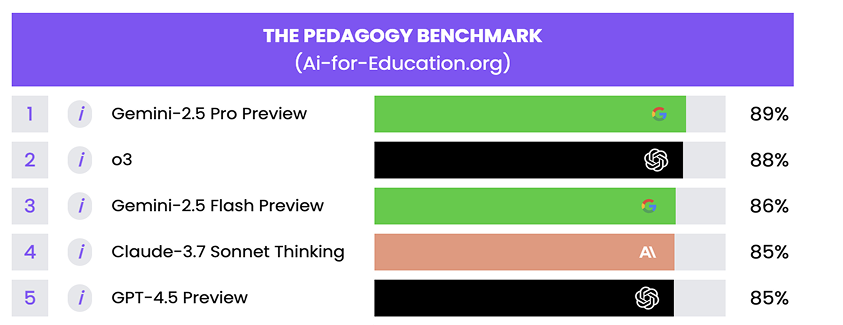
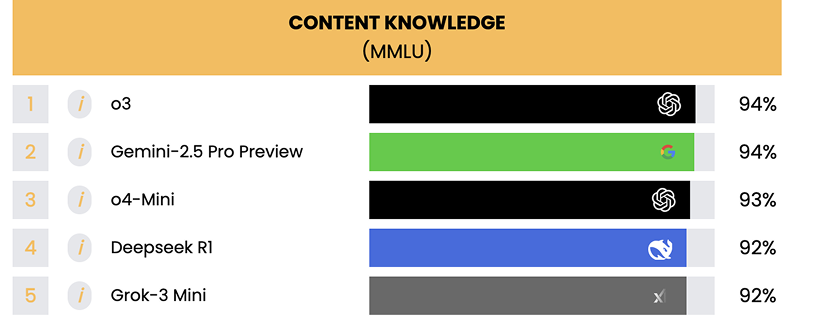
“Not all AI tools are created equal. To help educators, researchers, and policymakers evaluate which AI-powered
resources align with effective teaching and learning principles, we recommend using AI-for-Education Pedagogical
Benchmark-a global standard developed by education researchers and technologists”

Adaptive Learning Platforms
ToolDescriptionAccess
Khan Academy with KhanmigoAI tutor for math, science, history; available in English and some content in FrenchACCESS
Century TechAI recommends lessons based on student’s performance; powerful for personalized learningACCESS
Lesson Planning and Content Creation
ToolDescriptionAccess
CuripodAI designs full interactive lessons in minutes (supports French)ACCESS
MacifSchool.aiCreates quizzes, lesson plans, feedback emails-all powered by AI, adapted for teachersACCESS
Assessment and Feedback
ToolDescriptionAccess
GradescopeAI speeds up grading and gives consistent feedback for written and math assignmentACCESS
EdPuzzleHelps teachers make videos interactive with auto-graded quizzesACCESS
Accessibility Tools
ToolDescriptionAccess
Immersive ReaderHelp students with reading challenges by adjusting text, translating, or reading aloudACCESS
Seeing AIAI describes the world for visual impaired learners (available via app stores)ACCESS
Benchmarking AI –Education Tools
ToolDescriptionAccess
The Pedagogy Benchmark: AI-For- Education)A framework for evaluation how well AI education tools support effective teaching and learning, based on five core pedagogical principlesACCESS

Other

Tool

Description

Access

Intro to AI and Machine Learning
CourseDescriptionAccess
Elements of AI (University of Helsinki)Free course designed to demystify AI for everyone. Available in FrenchACCESS
Google AI for EveryoneBasic course to understand AI concepts in practical termsACCESS
Ai for educators
ToolDescriptionAccess
AI for Teachers (ISTE Certified Program)Training for integrating AI ethically and practically into classroomsACCESS
Microsoft AI Classroom SeriesAI tools and case studies for teachers; available freeACCESS
Ethics and AI Literacy
CourseDescriptionAccess
UNESCO AI Ethics CourseTraining for integrating AI ethically and practically into classroomsACCESS
MIT responsible AI for EducationPrinciples of transparency, bias mitigation, and ethics in school AI adoptionACCESS
Data Literacy for Educators
ToolDescriptionAccess
Data Science for Teachers (Coursera)Introduction to basic data analysis skills for education professionalsACCESS
The Open Data Institute’s Open Learning ResourcesFree modules on working in open data responsibly

AI and Digital Innovation Datasets

CourseDescriptionAccess
Open AI Dataset ArchivePublic datasets supporting AI research, language modeling, and innovationACCESS
Hugging Face Educational DatasetsOpen NLP and AI datasets focusing n multilingual and educational contentACCESS
Data Science Africa Open DatasetsAfrican datasets for machine learning and data science innovationACCESS
Data Analytics
ToolDescriptionAccess
Microsoft CopilotEnables seamless data analysis and report generation directly within Microsoft Excel and PowerPoint using natural language prompts.ACCESS
Julius AITransforms spreadsheets and datasets into interactive, chat-based analysis tools, allowing users to explore data through conversation without coding.ACCESS
Claude (by Anthropic)Acts as a powerful AI assistant that can analyze, summarize, and interpret complex datasets, documents, or policy materials in natural language.ACCESS
Image and Video Generation
ToolDescriptionAccess
MIDJOURNEYGenerates highly artistic, stylized images from text prompts, ideal for visual storytelling, concept art, and design inspiration.ACCESS
ARCADSEnables rapid creation of professional-looking video ads and motion graphics using AI, with customizable templates and brand assets.ACCESS
KREA.AIOffers real-time AI image generation and editing tailored for designers, allowing precise control over style, texture, and composition.ACCESS
Document Summarization and Note Taking
ToolDescriptionAccess
NOTEBOOKLM
(by Google)
Acts as an AI research assistant that reads your documents, highlights key ideas, and generates summaries or study guides tailored to your questions.ACCESS
GRANOLATransforms long articles, lectures, and videos into concise, structured notes and study-ready outlines using AI-driven summarization.ACCESS
BOX AIProvides secure, AI-powered summarization and insights for enterprise documents stored in Box, enabling fast information retrieval and decision-making.ACCESS
Voice Tools
ToolDescriptionAccess
ELEVENLABSGenerates ultra-realistic AI voices in multiple languages and emotions, ideal for audiobooks, education, and content localization.ACCESS
INTERCOMUses AI voice and chat to deliver personalized, automated customer support, enabling faster and more human-like interactions at scale.ACCESS
Play.htCreates high-quality AI voiceovers from text using a wide range of realistic voices and languages, ideal for e-learning, podcasts, and video narration. Supports 130+ languages ad 900+voicesACCESS
Email Outreach and Automation
ToolDescriptionAccess
INSTANTLY.AIUses AI to automatically draft, personalize, and send email sequences that adapt to recipient behavior, streamlining outreach and engagement.ACCESS
TYPEFULLYCombines AI writing assistance with scheduling and analytics for crafting effective Twitter/X threads and emails, focused on audience growth and clarity.ACCESS
ZAPIERConnects and automates workflows between apps (including email platforms) using simple AI-powered triggers—no coding required.ACCESS
Writing
ToolDescriptionAccess
CLAUDEAn AI assistant designed for thoughtful, structured writing, capable of drafting, editing, and summarizing long-form content with a focus on safety and context.ACCESS
SCRYBEProvides AI-powered writing support tailored for academic and research contexts, helping users outline, cite, and polish scholarly work.ACCESS
LEXA distraction-free AI writing tool that helps you generate ideas, draft content, and overcome writer’s block directly within a sleek document editor.ACCESS
Research and Development
ToolDescriptionAccess
PERPLEXITYAn AI-powered search and research assistant that delivers up-to-date, sourced answers and summaries from across the web and academic databases.ACCESS
EXAUses AI to help researchers and marketers discover high-quality content, citations, and web sources with precision search beyond traditional engines.ACCESS
SPARKTOROProvides audience intelligence by analyzing online behavior and content trends,helping researchers and communicators understand what their target groups read, watch, and follow.ACCESS
Talent Strategy and Recruiting
ToolDescriptionAccess
BEAMERYAn AI-driven talent lifecycle platform that helps organizations identify, engage, and develop candidates with predictive insights and workforce planning toolsACCESS
EIGHTFOLD AIUses deep learning to match people to the right roles by analyzing skills, career paths, and talent potential across internal and external candidates.ACCESS
HIREVUEProvides AI-powered video interviewing and assessment tools that streamline hiring by evaluating communication, problem-solving, and job-specific traits.ACCESS
Managing Inventory
ToolDescriptionAccess
CLAUDE (Anthropic)Acts as an AI assistant that can analyze inventory reports, forecast trends, and support decision-making through natural language insights and summaries.ACCESS
GOOGLE GEMINIA multimodal AI model that can interpret spreadsheets, dashboards, and stock visuals to help optimize inventory levels and supply chain planning.ACCESS
LINNWORKSSpecialized in e-commerce, this AI-powered platform automates inventory tracking, order management, and stock forecasting across multiple sales channels.ACCESS
ORDERBOTAutomates inventory, order fulfillment, and product information across multiple e-commerce and retail channels, using AI to ensure real-time accuracy and reduce stockouts.ACCESS
NetSuite
(by Oracle)
Offers a comprehensive AI-enabled ERP platform that manages inventory, procurement, and demand forecasting at scale, ideal for complex, multi-location operations.ACCESS

Hub IA-Éducation

Gouvernance et législation

Cette section de notre plateforme IA - Éducation met en lumière les cadres mondiaux et les stratégies nationales qui guident l'utilisation éthique et efficace de l'intelligence artificielle dans l'éducation. S'appuyant sur les recommandations de l'UNESCO sur l'IA et l'éducation, ainsi que sur une liste de stratégies nationales d'IA - Éducation de pays du monde entier, cet espace offre des points de référence précieux pour façonner la voie du Sénégal. En tirant parti des expériences mondiales et en nous alignant sur les normes internationales, nous souhaitons soutenir une gouvernance responsable, inclusive et avant - gardiste de l'IA dans notre système éducatif.

Gouvernance et législation

Multilateral 3

Multilateral 3

Multilateral 3

UNESCO: Éducation à l'IA, guide pour les décideurs politiques

Union Africaine: Projet de politique de Politique

Multilateral 3

Senegal

Egypt: The National Egyptian AI Strategy

Kenya National Digital Master Plan

Mauritius AI Strategy

Morocco AI Strategy & Legislation

Nigeria: National Artificial Intelligence Policy

Rwanda: AI legislation & Strategy

Africa Country 8

America Country 8

Canada

Chile: AI-Education Legislation

Uruguay: AI-Education Legislation

Americas Country 4

Americas Country 5

Americas Country 6

America Country 7

Europe Country 8

EU AI-Legislation: EU Artificial Intelligence Act

Estonia: AI Leap Initiative

Switzerland: Swiss National AI Institute

Finland: AI Guidelines

Europe Country 5

Europe Country 6

Europe Country 7

China: Mandatory AI Education & Curriculum Integration

India: INDIAai Portal

South Korea: AI Framework Act

Singapore: AI in Education Policies

Japan: AI Education Integration

Asian Country 6

Asian Country 7

Asian Country 8

Intel: AI for Youth Program

Software & Information Industry Association

Global IT 6

Global IT 7

Global IT 8

Microsoft: Responsible AI principles

Google: AI Principles

IBM: AI Fairness 360

World Economic Forum: AI Guidance for Schools

National Science Foundation: Guidelines for K-12 AI Education

EDUCAUSE: AI Policies and Guidelines

Academic 5

Academic 6

Academic 7

Academic 8

Center of AI and Digital Policy: Guidance

Retour en haut
TitleDescription
General
Pedagogy
[3 Credits]
▪ The course will provide students with a comprehensive understanding of teaching and learning theories, instructional strategies, and classroom management. The goal is to give future teachers the foundational knowledge and practical skills needed to create effective learning environments and adapt their teaching methods to diverse learners.
▪ The course will be particularly useful for new teachers with an advanced degree in a given subject, but without teaching experience.
▪ The main course objectives are:
▪ Understand the key theories and principles of teaching and learning.
▪ Develop and apply a range of instructional strategies.
▪ Create lesson plans that cater to diverse learning needs.
▪ Manage classroom dynamics effectively.
▪ Evaluate and reflect on their teaching practices.
Topics ▪ Module 1: Foundations of Pedagogy and Learning Theories
▪ Module 2: Lesson Planning and Curriculum Design
▪ Module 3: Teaching Methods and Instructional Strategies
▪ Module 4: Classroom Management and Student Engagement
▪ Module 5: Assessment and Feedback
▪ Module 6: Reflective Practice and Professional Development
Further
Reading
▪ Bruner, J. (1996). The Culture of Education.
▪ Marzano, R. J. (2007). The Art and Science of Teaching.
▪ Wiggins, G., & McTighe, J. (2005). Understanding by Design.
▪ Tomlinson, C. A. (2001). How to Differentiate Instruction in Mixed-Ability Classrooms.
▪ Wong, H., & Wong, R. (2009). The First Days of School: How to Be an Effective Teacher.
▪ Brookfield, S. (2017). Becoming a Critically Reflective Teacher.
▪ Thierno Souleymane Diop, Tu Seras Enseignant, Mon Fils, Presses Universitaires de Dakar, (2015)
TitleDescription
AI Education
Applications

[3 Credits]
▪ The course will focus on combining a technical understanding with the practical applications in teaching and learning contexts.
▪ The main goal is to empower teacher trainees to understand AI, critically evaluate AI tools, and integrate AI effectively to enhance teaching and learning experiences.
▪ Course Objectives: explain key AI concepts and how AI functions; critically assess AI tools for education; implement AI-driven teaching and learning strategies; reflect on the ethical and social implications of AI in education; develop AI-enhanced lesson plans and learning activities.
Topics▪ Module 1: Introduction to AI and Machine Learning: what is AI, how does it work, applications
▪ Module 2: AI in Education, Opportunities and Challenges (Personalized Learning, Intelligent Tutoring, Bias/Fairness in AI)
▪ Module 3: Personalized Learning and Adaptive Learning Systems (Teacher Role in Personalization)
▪ Module 4: AI for Assessment and Feedback (AI for Formative and Summative Assessment, Limitations of AI assessment)
▪ Module 5: AI for Student Engagement and Classroom Management (Education Tools, AI for Multimodal Learning)
▪ Module 6: Ethical and Social Implications of AI in Education (AI and Equity, Data Privacy, Human vs Machine Intelligence)
Further
Reading
▪ Russell, S., & Norvig, P. (2020). Artificial Intelligence: A Modern Approach (4th ed.).
▪ Luckin, R. (2018). Machine Learning and Human Intelligence: The Future of Education for the 21st Century.
▪ Holmes, W., Bialik, M., & Fadel, C. (2019). Artificial Intelligence in Education: Promises and Implications for Teaching and Learning.
▪ Selwyn, N. (2019). Should Robots Replace Teachers? AI and the Future of Education.
▪ Luckin, R. (2010). Redesigning Learning Contexts: Technology-Rich, Learner-Centred Ecologies.
▪ Kay, J., & Kummerfeld, B. (2019). "Creating Personalized Learning with AI." IEEE Transactions on Learning Technologies.
▪ Heffernan, N. (2017). "AI and the Future of Testing." Journal of Learning Analytics.
▪ McGraw, B. (2018). AI in Assessment: New Horizons in Educational Measurement.
▪ Chen, B., et al. (2020). "AI for Enhancing Student Engagement." Educational Technology Research and Development.
▪ Rose, C. P. (2018). "Conversational Agents in Education." Learning Sciences Journal.
▪ Selwyn, N. (2021). Education and Artificial Intelligence: Critical Perspectives.
▪ Eubanks, V. (2018). Automating Inequality: How High-Tech Tools Profile, Police, and Punish the Poor.
TitleDescription
Sociology and
Education
[3 Credits]
▪ This course will cover sociological theories with practical teaching strategies to help future educators understand the role of education in society and the ways in which education can both reflect and challenge social structures.
▪ By the end of the course, teacher trainees will be able to:
▪ Understand key sociological theories and concepts relevant to education.
▪ Analyze the relationship between education and social structures (e.g., class, race, gender).
▪ Examine the impact of education on social mobility and inequality.
▪ Critically assess the role of schools in socialization.
▪ Apply sociological concepts to classroom dynamics and education policy.
Topics▪ Module 1: Introduction to Sociology and Education
▪ Module 2: Education and Socialization
▪ Module 3: Theories of Education
▪ Module 4: Social Stratification and Education
▪ Module 5: Education Policy and Reform
▪ Module 6: Teachers as Agents of Social Change
Further
Reading
▪ Sociology of Education: A Critical Reader – by Alan R. Sadovnik
▪ Education and Sociology – by Emile Durkheim
▪ Pedagogy of the Oppressed – by Paulo Freire
▪ Cultural Capital: The Problem of Educational Inequality – by Pierre Bourdieu
▪ Inequality and Education – by Richard Arum
▪ Les Jeunes de la Rue a Dakar, Safietou Diack, Karthala (2022)
▪ Jeunesse, Exclusion et Violence a Dakar, Oumar Cisse and Djibril Diop, Karthala (2021)
▪ Moi Aussi, Ma Place est a l’Ecole, Cheikh Tidiane Bousso, l’Harmattan (2024)
▪ Les Enfants exclus ou en marge du systeme scolaire Classique au Senegal, H Dia; AS Diop, Melanie Jacquemim (2019)
TitleDescription
Financial and
Administrative
management of
Schools
[3 Credits]
▪ The course would cover budgeting, resource allocation, school leadership, policy implementation, and accountability—ensuring that teacher trainees develop a comprehensive understanding of the financial and operational aspects of running a school effectively.
▪ By the end of the course, teacher trainees will be able to:
▪ Understand the financial structure of schools and sources of funding.
▪ Develop and manage a school budget effectively.
▪ Understand and apply financial policies and regulations in education.
▪ Manage school resources, staffing, and infrastructure efficiently.
▪ Analyze the role of school leadership in effective administrative management.
Topics▪ Module 1: Introduction to Financial and Administrative Management in Schools: private vs public school management
▪ Module 2: School Funding and Budgeting: financial forecasting and contingency planning
▪ Module 3: Financial Accountability and Transparency: Financial Control & Reporting; Compliance
▪ Module 4: Human Resource and Staff Management: Recruitment-Retention; Performance-Evaluation; Salary-Benefits
▪ Module 5: Facilities and Resource Management: School Infrastructure, Procurement-Inventory, Technology
▪ Module 6: Strategic Planning and Policy Implementation: risk management and crisis planning
Further
Reading
▪ Bush, T. (2011). Theories of Educational Leadership and Management.
▪ Brighouse, T., & Woods, D. (2013). The A-Z of School Improvement: Principles and Practice
▪ Odden, A., & Picus, L. (2014). School Finance: A Policy Perspective
▪ Levačić, R. (2011). Managing Financial Resources in Schools.
▪ Rebore, R. W. (2014). Human Resources Administration in Education: A Management Approach.
▪ Mulford, B. (2016). School Leadership and Resource Allocation
TitleDescription
Human Resource
Management in
Schools
[3 Credits]
▪ Designing a course on Human Resource Management (HRM) in Schools for teacher trainees will help future educational leaders develop the skills to effectively manage staff, build a positive work culture, and address HR-related challenges in schools.
▪ By the end of the course, trainees are expected to:
▪ Understand the principles of HRM in educational settings.
▪ Develop strategies for staff recruitment, retention, and professional development.
▪ Apply conflict resolution and performance management techniques.
▪ Build a positive and inclusive school work culture.
▪ Navigate labor laws and ethical considerations in education.
Topics▪ Module 1: Introduction to HRM in Schools
▪ Module 2: Recruitment and Hiring Practices
▪ Module 3: Staff Retention and Motivation
▪ Module 4: Professional Development and Training
▪ Module 5: Performance Management and Evaluation
▪ Module 6: Conflict Resolution and Staff Relations
▪ Module 7: Labor Laws and Ethical Issues
▪ Module 8: Technology and Data Management
Further
Reading
▪ Human Resource Management in Education – by Justine Mercer, Bernard Barker, Richard Bird
▪ Educational Administration: Theory, Research, and Practice – by Wayne Hoy and Cecil Miskel
▪ Improving Teacher Quality through Professional Development – by Linda Darling-Hammond
▪ The Principal as Human Resources Leader – by M. Scott Norton
▪ La gestion des ressources humaines pour la réussite scolaire, 2ᵉ édition
▪ Human Resource Management in the Education Sector, UNESCO (2022)
TitleDescription
Leadership in
Education
[3 Credits]
▪ This course provides a blend of theory, practical skills, and reflective practice.
▪ The main goal is to empower future educators to understand leadership styles, develop decision-making and conflict resolution skills, and build a vision for improving educational outcomes.
▪ By the end of the course, trainees are expected to:
▪ Understand key theories and models of educational leadership.
▪ Analyze different leadership styles and their impact on school culture and student outcomes.
▪ Develop strategic decision-making and problem-solving skills.
▪ Foster effective communication and team-building in an educational setting.
▪ Identify and resolve ethical dilemmas in teaching practice.
▪ Design and implement a leadership project within an educational context.
Topics▪ Module 1: Foundations of Education Leadership
▪ Module 2: Leadership Styles and Personal Reflection
▪ Module 3: Vision and Strategic Planning
▪ Module 4: Decision Making and Problem Solving
▪ Module 5: Communication and Team Building
▪ Module 6: Instructional Leadership
▪ Module 7: Change Management and Conflict Resolution
▪ Module 8: Building a Positive School Culture
Further
Reading
▪ The Principal: Three Keys to Maximizing Impact – by Michael Fullan
▪ Instructional Leadership for School Improvement – by Sally J. Zepeda
▪ The Leadership Challenge – by James M. Kouzes and Barry Z. Posner
▪ Leading in a Culture of Change – by Michael Fullan
▪ "Le leadership en éducation" – McGraw-Hill
▪ "Le leadership éducatif : Entre défi et fiction" – Yves Dutercq, Monica Gather Thurler, Guy Pelletier
▪ "La gestion du changement à l'école" – Christine Brabant, Jean Bernatchez, Christiane Caneva, Claude St-Cyr
TtitleDescription
Legislation &
Deontology in
Education
[3 Credits]
▪ The course will provide students with a solid understanding of the legal framework governing education and the ethical principles that guide professional conduct. This course would help future teachers navigate complex legal situations, uphold professional standards, and make ethical decisions in their teaching practice.
▪ The course would be useful for new teachers, but also experienced teachers who may not be familiar with the existing legal framework.
▪ The main course objectives are:
▪ Understand the legal framework governing the education system.
▪ Interpret and apply education laws and policies in classroom settings.
▪ Identify and resolve ethical dilemmas in teaching practice.
▪ Uphold professional standards and codes of conduct.
▪ Understand the rights and responsibilities of teachers, students, and parents.
Topics▪ Module 1: Introduction to Education Law and Ethics (Intersection of Law and Ethics in Education)
▪ Module 2: Legal Framework of the Education System
▪ Module 3: Teacher Rights and Responsibilities
▪ Module 4: Student Rights and Responsibilities
▪ Module 5: Ethical Principles and Professional Conduct
▪ Module 6: School Governance and Accountability
Further
Reading
▪ “L’Éducation en Afrique de l’Ouest: Histoire, Défis et Perspectives” – by Boubacar Barry
▪ Loi d’Orientation de l’Éducation Nationale (1991)
▪ “Éthique et Déontologie Professionnelle des Enseignants” – by Jacques Lévine
▪ “Professional Ethics in Education” – by Kenneth A. Strike & Jonas F. Soltis
▪ “Teaching with Integrity: The Ethics of Higher Education Practice” – by Bruce Macfarlane
TitleDescription
Montessori:
Language &
Mathematics
[3 Credits]
▪ The course should aim to equip teacher trainees with both theoretical knowledge and practical skills. Example objectives include:
▪ Understand the Montessori philosophy of language and mathematics education
▪ Master the use of Montessori materials for teaching language and math
▪ Develop strategies to foster language acquisition and mathematical thinking
▪ Create a Montessori-prepared environment for language and math learning
▪ Adapt materials and techniques to meet the individual needs of learners
Topics▪ Module 1: Foundations of Language in Montessori
▪ Module 2: Oral Language Development
▪ Module 3: Written Language (Pre-Writing and Writing)
▪ Module 4: Reading and Grammar
▪ Module 5: Foundations of Montessori Mathematics
▪ Module 6: Numeration and Counting
▪ Module 7: The Decimal System and Place Value
▪ Module 8: Linear Counting and Skip Counting
▪ Module 9: Fractions and Advanced Concepts
Further
Reading
▪ Montessori, M. (1912). The Montessori Method.
▪ Montessori, M. (1949). The Absorbent Mind.
▪ Montessori, M. (1948). From Childhood to Adolescence.
▪ Montessori, M. (1949). The Absorbent Mind.
▪ Montessori: A Modern Approach – by Paula Polk Lillard
▪ Montessori Read and Write: A Parent's Guide to Literacy – by Lynne Lawrence
▪ Montessori Language Arts – by Muriel Dwyer
▪ Math Works: Montessori Math and the Developing Brain – by Michael Duffy
TitleDescription
Montessori:
Practical Life &
Sensorial
[3 Credits]
▪ The course should aim to equip teacher trainees with both theoretical knowledge and practical skills. Example objectives include:
▪ Understanding the philosophy behind the Montessori approach
▪ Mastering the use of Montessori Practical Life and Sensorial materials
▪ Learning how to prepare and organize a Montessori classroom environment
▪ Developing observation and guidance skills to support student learning
▪ Applying Montessori principles to foster independence and sensory exploration
Topics▪ Module 1: Introduction to Montessori Education: Respect of Child, Freedom with Limits
▪ Module 2: Practical Life (Care of Self, Environment, Social Behavior, Fine Motor Skills)
▪ Module 3: Sensorial Education (Refinement of Senses)
▪ Module 4: Preparing the Montessori Classroom
▪ Module 5: Observation and Child Development
▪ Module 6: Adapting Montessori for Different Needs
Further
Reading
▪ Montessori, M. (1912). The Montessori Method.
▪ Montessori, M. (1949). The Absorbent Mind.
▪ Montessori, M. (1948). From Childhood to Adolescence.
▪ Montessori, M. (1949). The Absorbent Mind.
▪ Montessori: A Modern Approach – by Paula Polk Lillard
▪ Gutek, G. (2004). The Montessori Method: The Origins of an Educational Innovation.
▪ Lillard, A. S. (2005). Montessori: The Science Behind the Genius.
▪ Chattin-McNichols, J. (1992). The Montessori Controversy.
▪ Lillard, P. P. (1996). Montessori Today: A Comprehensive Approach to Education from Birth to Adulthood.
▪ Teaching Montessori in the Home – by Elizabeth G. Hainstock
TitleDescription
Intro to
Montessori
Education
[3 Credits]
▪ The course involves blending theoretical foundations, Montessori philosophy, and practical classroom techniques.
▪ The course will give trainees a solid understanding of Montessori principles, child development theories behind it, and hands-on experience with Montessori materials and methods.
▪ It will be critical after the class for trainees to have a good understanding of the role of a teacher in a Montessori setting.
Topics▪ Module 1: Foundations of Montessori Education: History & Background, Montessori Philosophy
▪ Module 2: The Montessori Classroom Environment: Prepared Environment, Teacher Role
▪ Module 3: Montessori Materials and Methods: Practical Life, Sensorial Materials, Language & Mathematics
▪ Module 4: Montessori and Child Development: Development Stages, Sensitive Periods
▪ Module 5: Montessori Curriculum in Action: Daily Routines, Curriculum Areas
▪ Module 6: Assessment and Observations: Observation Techniques, Child-Led Learning & Assessment
Further
Reading
▪ Montessori, M. (1912). The Montessori Method.
▪ Gutek, G. (2004). The Montessori Method: The Origins of an Educational Innovation.
▪ Montessori, M. (1949). The Absorbent Mind.
▪ Lillard, P. P. (1972). Montessori: A Modern Approach.
▪ Hainstock, E. (1997). The Essential Montessori.
▪ Lillard, A. S. (2005). Montessori: The Science Behind the Genius.
▪ Montessori, M. (1948). From Childhood to Adolescence.
▪ Standing, E. M. (1957). Maria Montessori: Her Life and Work.
▪ Chattin-McNichols, J. (1992). The Montessori Controversy.
▪ Lillard, P. P. (1996). Montessori Today: A Comprehensive Approach to Education from Birth to Adulthood.
TitleDescription
Well Being
[3 Credits]
▪ Teaching is one of the most noble jobs one can hold, but with great rewards come immense challenges. This Thinking Out of the Box class will give different toolkits for teachers to unwind and return to homeostasis.
▪ It is equally important for teachers to understand the determinants of children’s well-being, but also to be mindful of their own.
▪ Course will cover a blend of theory, practical strategies, and reflective exercises to help trainees manage their mental, emotional, and physical health, while navigating the specific demands on teachers from students, parents, and school administrators.
Topics▪ Understanding the diverse aspects of Well-Being: physical, emotional, social, intellectual, occupational
▪ How Well-Being affects teacher effectiveness
▪ Mental and Emotional Health: stress triggers, rest and relaxation/meditation, breath work, Mental Presence
▪ Physical Being: Exercise & Proper Nutrition, Posture and Ergonomics, Movement (stretches, exercises, walking)
▪ Professional and Social Well-Being: Classroom management, Work Life Balance, Fun
▪ Accessing support and resources: school-based and external resources, reducing stigma around mental health
▪ Harmony with the environment
Further
Reading
▪ Day, C., & Gu, Q. (2014). Resilient Teachers, Resilient Schools: Building and Sustaining Quality in Testing Times. Routledge.
▪ Jennings, P. A. (2015). Mindfulness for Teachers: Simple Skills for Peace and Productivity in the Classroom. W.W. Norton & Company.
▪ Parker, P. D., & Martin, A. J. (2009). "Coping strategies and positive affect in the workplace: Evidence from a national survey of teachers." Educational Psychology, 29(2), 187–205.
▪ Hakanen, J. J., Bakker, A. B., & Schaufeli, W. B. (2006). "Burnout and work engagement among teachers." Journal of School Psychology, 43(6), 495–513.
▪ Gold, E., Smith, A., Hopper, I., et al. (2010). "Mindfulness-based stress reduction (MBSR) for primary school teachers." Journal of Child and Family Studies, 19(2), 184–189.
▪ Ratey, J. J., & Hagerman, E. (2013). Spark: The Revolutionary New Science of Exercise and the Brain. Little, Brown and Company.
TitleDescription
Education &
Technology
[3 Credits]
▪ Technology is an integral part of life today. It needs to be carefully integrated into 21st century learning and the maestro for how it is introduced and utilized will always be the teacher. Embracing technology can be a powerful tool for the educational system, permitting efficiencies for educators in designing curriculums, handling administrative demands, communication with parents, and a powerful teaching tool allowing students to learn in ways that were not previously possible or practical.
Topics▪ How to use software and AI to aid in curriculum planning and parent communication
▪ How to use administrative software
Further Reading▪ Possible partnership with www.team4tech.org
▪ A. Upadhyay and A. Taddese (2020). EdTech in Liberia: A Rapid Scan. (EdTech Hub Country Scan No. 01)
https://docs.edtechhub.org/lib/2HM2SBVM Anderspink
▪ Content Curation For Learning (2017). Anderspink, Inc.
https://anderspink.com/documents/content-curation-book.pdf C. Lemke and J. Britten (2022)
▪ The range of educational technologies. Marina del Rey, CA: Metiri Group
▪ Educational Technology for Teachers - Gregory M. Francom
▪ Educational Technology for Teaching and Learning (4th Edition) by Timothy J. Newby, Donald Stepich, James Lehman, James D. Russell, & 1 more
▪ Projet Voltaire (https://www.projet-voltaire.fr/)
▪ Khanmigo: The AI Student Tutor
TitleDescription
Diversity &
Inclusion
[3 Credits]
▪ The classroom, if composed correctly, is a reflection of the diverse world. Thus, it is critical that all are given equal opportunity to learn regardless of physical or emotional states. It is the teacher’s responsibility to ensure a safe and conducive learning environment for all. This course will help teachers identify and work with students with special needs.
Topics ▪ Become familiar with the legislation of equality and non-discrimination and the plan of equality and non-discrimination at educational institutions
▪ Interaction, equality & diversity in learning through academic reflection and pedagogical and ethical self-reflection
▪ The prevention of discriminatory norms and bullying so as to promote an equal and safe learning environment
▪ Identification and adaptation for students with special needs
Further Reading▪ Farrell, M. (2009). Foundations of Special Education: An Introduction. Singapore: Wiley-Blackwell
▪ Handbook of Educational Psychology and Students with Special Needs, edited by Andrew J. Martin, Rayne A. Sperling, Kristie J. Newton
▪ Inclusive Education for the 21st Century: Theory, Policy and Practice, edited by Linda J. Graham
▪ Identification and Evaluation of Learning Disabilities: The School Team’s Guide to Student Success, 1st Edition
TitleDescription
Arts &
Education
[3 Credits]
▪ “Logic will get you from A to B. Imagination will take you everywhere.” – Albert Einstein
▪ There is no better way to stimulate imagination than exposure to art. Performing and visual arts allow students to tap into their creative center, and the teachers are the maestros implementing the arts into students’ lives.
▪ This course will invite teacher trainees to learn to reinforce the core African cultural values through all the diverse artistic expressions.
Topics▪ Designing Musical Experiences for Young Children
▪ Integrating theater into the classroom
▪ Includes the teaching of the fine arts and the performance arts (art, music, movement/dance)
▪ Learning about the history and design of African musical instruments
▪ Inclusion & Participation in the Arts for Children with Disabilities
Further
Reading
▪ Arts Integration: Teaching Subject Matter through the Arts in Multicultural Settings, 5th Edition
▪ Artful Teaching: Integrating the Arts for Understanding Across the Curriculum, K–8, 2nd Edition
▪ How the ARTS Benefit Student Achievement
https://files.eric.ed.gov/fulltext/ED529766.pdf
TitleDescription
Research Lab
[3 Credits]
▪ For the field of education to continue to evolve, all teachers must be scientists who are curious, investigate, and critically develop their work.
▪ Capable of independent and collaborative problem setting, development work, and knowledge generation.
▪ Able to identify areas for pedagogical research and development and to address them theoretically and practically.
▪ Able to report on identified development issues and their solutions according to scientific practices.
Topics▪ Scientific method
▪ Data recording
▪ Working with our Think Tank
Further
Reading
▪ Institut Sangalkam Think Tank
▪ Research Methodology and Scientific Writing by C. George Thomas
TitleDescription
Linguistics
[3 Credits]
▪ Critical for all learning is the ability to learn language. Understanding the principles of linguistics and how they relate to the production and comprehension of language is vital for students. Bilingual settings present an additional challenge but also benefit for teachers and students alike. (Gabi)

▪ Linguistics for Bilingual Teachers is a course designed to provide foundational knowledge of language structure, use, and acquisition, with a focus on bilingual education. It explores key linguistic concepts such as phonology, morphology, syntax, semantics, and pragmatics, emphasizing their application in multilingual classrooms. The course also examines language acquisition theories, sociolinguistic factors affecting bilingualism, and strategies for supporting language development in diverse learners. Future bilingual educators will gain practical tools to foster students' linguistic and academic success in both their native and second languages. (Chat-GPT)
Topics ▪ Phonetics, phonology, morphology, the lexicon, syntax, and conversational usage
▪ Benefits of bilingualism
▪ Foundations of Linguistics
▪ Language Acquisition and Development: first and second language acquisition theories
▪ Sociolinguistics and Bilingualism: language attitudes, policies, and their implications for teaching and learning
▪ Language and Literacy in Bilingual Education: the interplay between oral language and literacy development
▪ Applied Linguistics for the Classroom: strategies for teaching language skills in two languages (Chat-GDP)
Further
Reading
▪ Bialystok, E. (2001). Bilingualism in Development: Language, Literacy, and Cognition. Cambridge, UK: Cambridge University Press.
▪ Zelasko, N., & Antunez, B. (2000). If Your Child Learns in Two Languages. National Clearinghouse for Bilingual Education.
http://www.ncela.gwu.edu/files/uploads/9/IfYourChild_LearnsInTwoLangs_English.pdf
▪ Introducing Linguistics, edited by Jonathan Culpeper, Beth Malory, Claire Nance, and Daniel Van Olmen
▪ Foundations of Bilingual Education and Bilingualism by Colin Baker and Wayne E. Wright
▪ The Study of Language by George Yule
▪ Second Language Learning and Language Teaching by Vivian Cook
▪ Bilingual Education: Integrating Language and Content by Fred Genesee
▪ Sociolinguistics and Language Education, edited by Nancy H. Hornberger and Sandra Lee McKay
▪ Loud and Clear: Effective Language of Instruction Policies for Learning, The World Bank Group, 2021 (Cheikh Added)
TitleDescription
Environment
and Education
[3 Credits]
There are endless intricacies that impact learning. In this course we will review the impact of the outside on learning from the
micro environment of the classroom: lighting, colors, furniture, temperature and noise to the macro factors including the home,
culture and technology (Gabi).
Topics▪ Physical Learning Environment: Optimal classroom layout and organization, access to necessary materials and resources, lighting and temperature management (Gabi)
▪ Home/Culture: Students' homes can be an environment that is conducive and complementary to learning or it can hinder and even reverse a student's advancement. As educators, we must reach into the students' home by educating the guardians on the importance of a healthy learning environment at home. Cultural aspects can impact students’ learning and objectives. Understanding culture and informing science-backed data on what is optimal for students is critical in impacting student success.
Further Reading▪ Building Effective Learning Environments: A Framework for Merging the Best of Old and New Practices by Kevin S. Krahenbuhl
▪ Design for Education Spaces and Tools for Learning, edited by Ana Rute Costa and Rachel Cooper
▪ The Anxious Generation, Jonathan Haidt (also in Children Psychology list)
▪ Relationship between Students’ Home Environment and their Academic Achievement at Secondary School Level
https://files.eric.ed.gov/fulltext/EJ1266643.pdf
▪ The End of Nature by Bill McKibben
▪ Education for Sustainable Development Goals: Learning Objectives by UNESCO (2017)
▪ Last Child in the Woods: Saving Our Children from Nature-Deficit Disorder by Richard Louv
▪ Environmental Education and Advocacy: Changing Perspectives of Ecology and Education, edited by Edward A. Johnson and Michael J. Mappin
TitleDescription
Curriculum
Design
[3 Credits]
Through the study of the basic principles of curriculum development, educators and curriculum leaders are provided with
knowledge, skills, and experiences to be actively involved in multiple facets of curriculum development, including planning,
design, developmental processes and approaches, implementation, evaluation, and improvement/change. Development of
curriculum will systematically address technology integration, evidenced-based practices, innovative and collaborative learning
experiences, and the impact of social, political, psychological, and economic factors. Finally, this course explores how to
evaluate a student's progress and ensure milestones are being met.
Topics▪ Organizational skills: How to leverage technology in planning
▪ Regulations in their own field of teaching, and the core curricula
▪ Guidelines for Montessori
▪ Regulatory requirements for Senegal
▪ International Baccalaureate requirements
▪ Evaluation: How to measure students progress, Milestones, How to ensure no student gets left behind
Further
Reading
▪ Designing and Assessing Courses and Curricula: A Practical Guide 3rd Edition by Robert M. Diamond (Author)
▪ Assessing Student Achievement: A Guide for Teachers and Administrators by Christopher Deneen and James Deneen
▪ Assessment of Student Achievement 10th Edition by C. Waugh (Author), Norman Gronlund (Author)
TitleDescription
Children
Pscychology
[4 Credits]
This course delves into the intricacies of children's development cognitively, socially, and emotionally from before
birth through adolescence. The course will cover early childhood Mental health is a critical part of life and thus the
evolution of it must be closely monitored. Teachers are arguably in the best position for identification of
psychological issues and this course will give the tools for identification and how to deal with behavior patterns as
well as psychological disorders.
Topics ▪ Social psychology: How social psychology relates to attitudes, behaviors, influences, and stress
▪ Milestones: Learn the different milestones in childhood development
▪ Behavioral models: How to use behavioral models to enhance the daily lives of children and their families
▪ Identity development: How identity develops during adolescence and emerging adulthood
▪ Psychological disorders: How to recognize psychological disorders and available treatments
Further Reading▪ Child and Adolescent Development for Educators Second Edition by Christine B. McCormick (Author), David G. Scherer (Author)
▪ Encyclopedia of Infant and Early Childhood Development 2nd Edition – Editor: Janette B. Benson
▪ The Anxious Generation – Jonathan Haidt
▪ Childhood and Adolescence: Voyages in Development 8th Edition by Spencer Rathus (Author)
TitleDescription
Science Behind
Learning
(neuroscience of
learning)
[4 Credits]
The human brain is the most complex organ and often considered the most complex structure in the universe.
There is still so much we do not know about the human brain but we have made strides in decoding parts of this
magnificent machine. This course will explore how the brain changes in response to sensory input, or stimuli, from
the environment. Learning is a biological activity that involves creating and strengthening connections between
neurons in the brain. These connections, called synapses, are formed into networks that give rise to all human
behavior, including learning.
Topics ▪ Neuroplasticity: The brain's ability to change in response to stimuli
▪ Neurogenesis: The production of new neurons
▪ Neural Networks: Neurons that fire together, wire together
▪ Memory: How knowledge is committed to our brain and reactivating the networks of neurons that were programmed during the learning process
▪ Outside Stimulus: how external elements including: sleep, food, stress impact the brain and the learning process
Further Reading▪ Blakemore, Sarah-Jayne and Uta Frith (2005). The Learning Brain: Lessons for Education. Malden, MA: Blackwell.
▪ Felder, Richard M. and Rebecca Brent (1996). “Navigating the Bumpy Road to Student-Centered Instruction.” An abridged version of this article was published in College Teaching 44: 43–7.
▪ Tokuhama-Espinosa, Tracey (2011). Mind, Brain, and Education Science: A Comprehensive Guide to the New Brain-Based Teaching. New York: W. W. Norton.
▪ Walker, J. D. et al. (2008). “A Delicate Balance: Integrating Active Learning into a Large Lecture Course.” CBE Life Sciences Education 7.4: 361–67.
▪ Winter, Dale et al. (2001). “Novice Instructors and Student-Centered Instruction: Identifying and Addressing Obstacles to Learning in the College Science Laboratory.” The Journal of Scholarship of Teaching and Learning 2.1: 14–42.
TitleDescription
The History of
Education
[4 Credits]
Learning dates as far back as human existence, this course will run through the development of the
formal education process. It will explore different teaching techniques and what we know worked and
what needed to evolve. From Antiquity, to what is considered the classical period to the modern era.
Topics▪ Antiquity Western: Greek and Romans and Eastern: Chinese and Japanese
▪ Classical Era: Europe and US
▪ Rise of education in Africa and Senegal
▪ Modern education post globalization
Further Reading▪ The Oxford Handbook of the History of Education (Oxford Handbooks) by John L. Rury (Editor), Eileen H. Tamura (Editor)
▪ A History Of Education In Antiquity Henri-Irénée Marrou, George Lamb (Contributor)
▪ Education and Society in Late Imperial China, 1600-1900 by Benjamin A. Elman (Editor), Alexander Woodside (Editor)
▪ The History of Education in Japan (1600 – 2000) (Routledge Studies in Educational History and Development in Asia)
▪ The History of Education in Europe 1st Edition by . History Of Education Society (Editor)
▪ Education and Democracy in Senegal Authors: Michelle T. Kuenzi
▪ Education as Politics: Colonial Schooling and Political Debate in Senegal, 1850s–1914 (Africa and the Diaspora: History, Politics, Culture)
▪ David Boilat (1814-1901), Le Precurseur, Par Yvon Bouquillon et Robert Cornevin, NEA, 1981
▪ L’Enseignement dans les Territoires Francais de l’Afrique de 1817 a 1910: Mission Civilisatrice ou Formation d’Une Elite, Denise Bouche, 1975
▪ L’Enseignement de l’Histoire au Senegal des Premieres Ecoles (1817) a la reforme de 1988, Abdoul Sow, 2004